Living longer matters. So does enjoying those years with energy, independence and relationships. Healthspan describes time lived in good health, with the ability to take part in the life you want. The idea becomes more useful when translated into practical actions.
What would you like to keep doing in ten or twenty years? That answer can guide how you take care of yourself today.
Years of life and ability to live them
Longevity measures time. Functional longevity focuses on how we live it: climbing stairs, travelling, working, caring for someone, playing or seeing friends. Two people of the same age can have very different abilities.
Prevention and medical treatment complement lifestyle habits. Managing blood pressure or treating illness supports health; training, eating well and resting build capacity for everyday life. This care matters both before and after a problem appears.
Ability to live
Building a reserve for everyday life
Climb · Carry · Walk
Training makes everyday effort more manageable.
What you need
The demands of your tasks: walking, climbing, carrying and moving.
What you can do
Your strength, endurance, balance and mobility.
The margin you earn
Easier tasks and resources for new challenges.
The functional reserve: an idea that changes the focus
Imagine that carrying a bag uses almost all your strength. Any additional tiredness makes the task difficult. If you gain strength, the same bag requires a smaller share of your capacity. The task has not changed; your reserve has increased.
The same is true of a hill or excursion. Improving aerobic capacity allows to sustain activity with less relative effort. This reserve helps to enjoy and face stages in which the routine is complicated.
Five areas you can work with
To understand better
Your functional longevity map
Strength
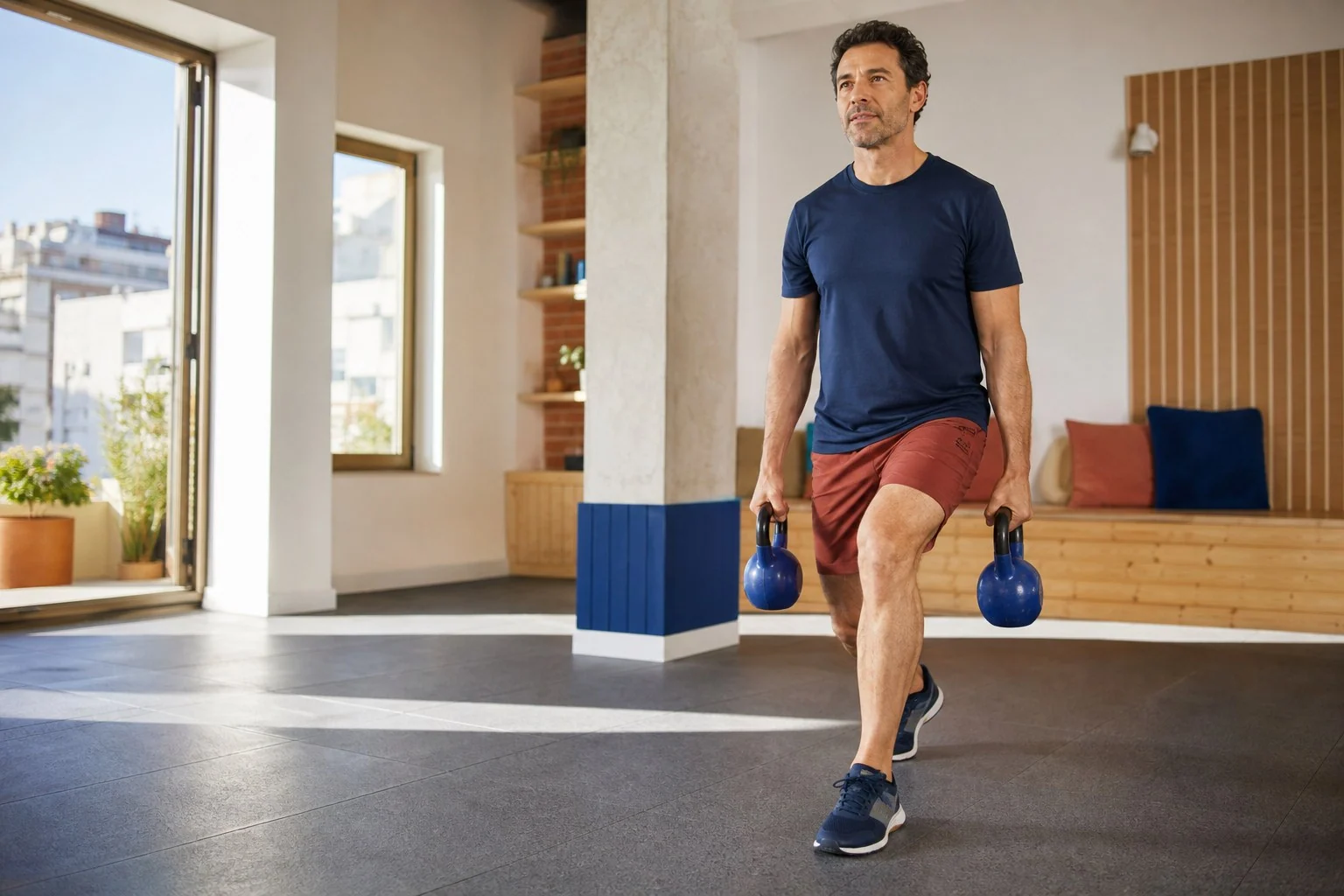
Train the big muscle groups and progress in daily movements.
Endurance
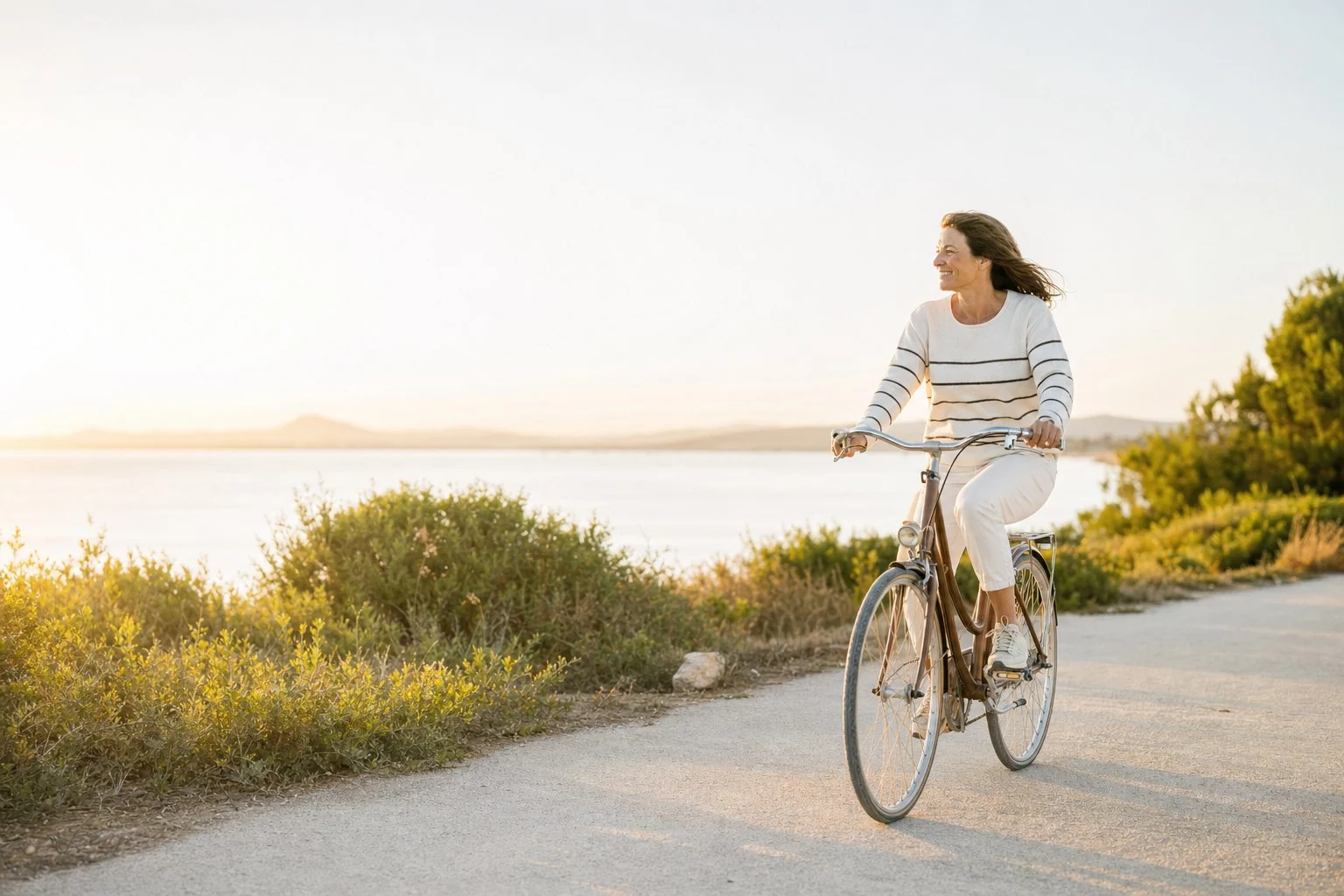
Walk briskly, cycle, swim or dance regularly.
Food
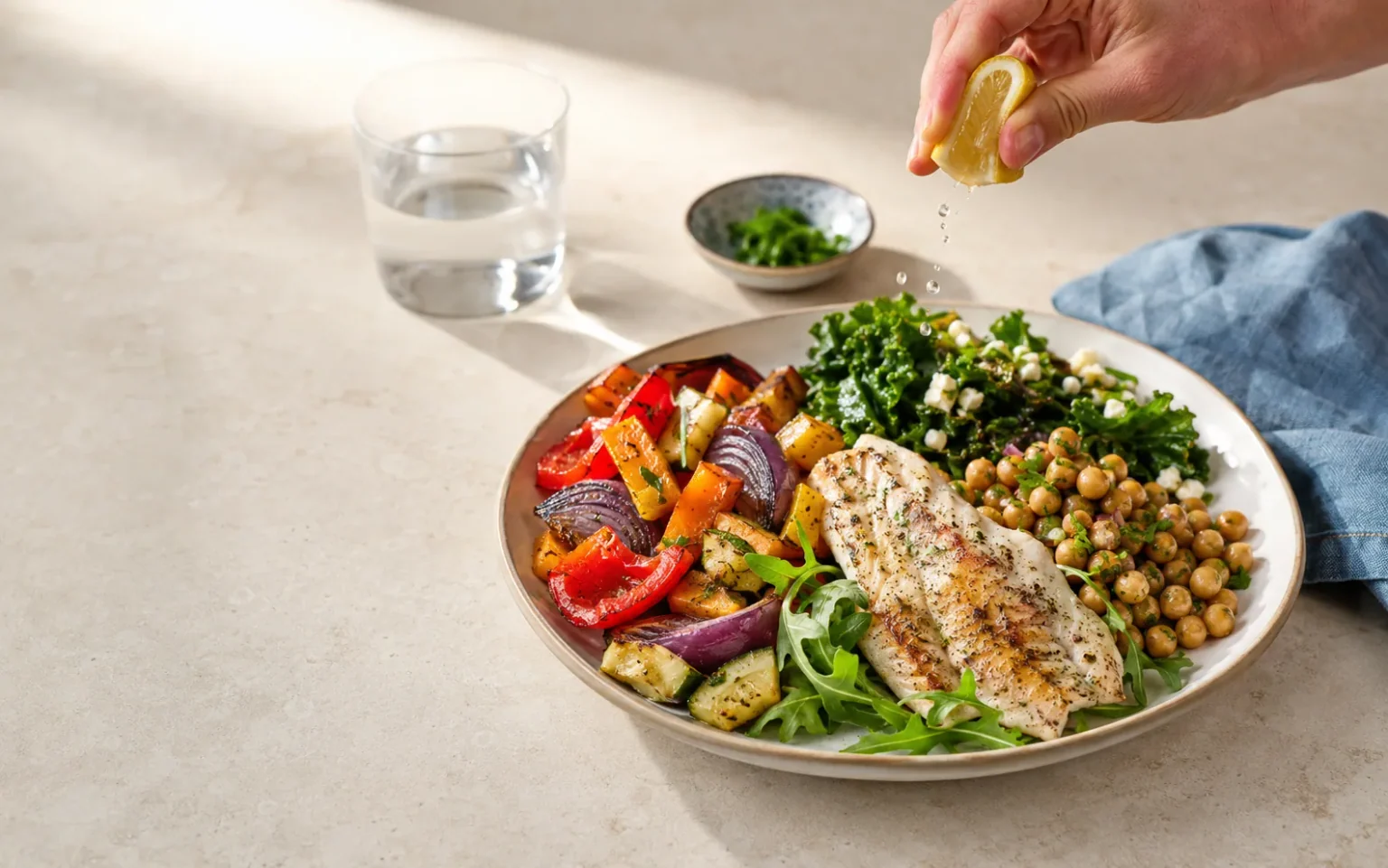
Eat enough, with protein, plant variety, and amounts in line with your situation.
Recovery
Make time for sleep and address stress.
Relations and purpose
Maintain activities and links that make you want to participate.
These areas reinforce each other. Better sleep makes training easier; adequate food supports recovery; shared activity helps you return the following week. Instead of pursuing one perfect habit, look for a combination that works in your life.
From an intention to a plan
Step by step
Choose · Practice · Review
Choose a capacity
For example, walk an hour, get up from the ground or go back to an activity you enjoy.
Define a first step
Book two strength sessions, a regular walk or a concrete improvement of meals.
Repeat and observe
Write down how you feel and what's starting to be easier.
Increase the challenge
Once you are comfortable with it, increase the time, resistance or complexity according to your objective.
If you come from little activity, the first step can be brief. If you already train, taking care of yourself also means looking for a sufficient stimulus to further improve. Starting and progressing are two stages of the same path.
What is worth following
| Question | A way to look at it |
|---|---|
| Am I gaining strength? | Repetitions, resistance used or how easily you stand up. |
| Do I get tired less? | The same route with less effort or more time of activity. |
| Does the plan support me? | Energy, appetite, sleep and recovery. |
| Do I take care of my health? | Clinical controls agreed by age, background and needs. |
Data are useful when they help you make decisions. An improvement in physical ability may be more meaningful than a “biological age” score. Use monitoring to recognise progress and choose what to do next.
A healthy life also needs to be enjoyable and manageable
The plan needs room for work, family, leisure and difficult weeks. Having alternatives prevents a complicated trip or afternoon from becoming abandoned: a short session, a simple meal or a shared walk keep the thread.
Taking care of functional longevity is investing in possibilities. Choose something you want to keep, start working it and make time to improve. The reward is also in what you can enjoy today.